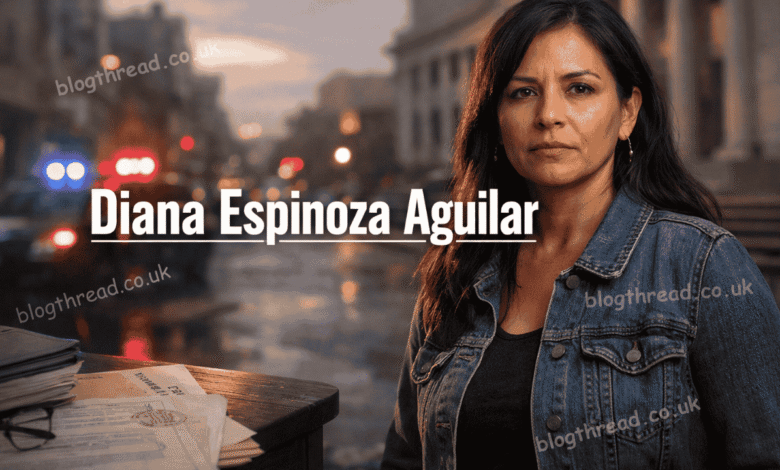
Diana Espinoza Aguilar isn’t a side character in someone else’s crime saga; she’s a living example of how proximity to power can swallow a person’s identity whole, whether she asked for that spotlight or not. The public doesn’t see her as an individual. They see a label. And that lazy framing misses the real story.
For years, diana espinoza aguilar has been reduced to a headline: wife, partner, associate. The facts are heavier than that, and far more complicated. Court records, sanctions lists, and media coverage show a woman whose life crossed paths with organized crime, law enforcement, and international policy. That mix turned diana espinoza aguilar into a name that keeps resurfacing in legal documents and government actions long after the original arrests faded from memory.
How Her Name Entered the Public Record
From private life to federal paperwork
The reason most people recognize diana espinoza aguilar has little to do with celebrity or business or activism. It comes from law enforcement files.
Official U.S. Treasury records list Diana Altagracia Espinoza Aguilar, born July 17, 1970, in Matachí, Chihuahua, Mexico. That listing didn’t happen by accident. It came through the Foreign Narcotics Kingpin Designation Act, a tool used to freeze assets and block financial dealings for people tied to major trafficking networks.
Once that happens, your name isn’t private anymore. It becomes searchable, quotable, and permanent.
For diana espinoza aguilar, the designation meant:
- Any assets connected to the U.S. could be frozen
- Americans are barred from doing business with her
- Financial institutions treat her as high risk or untouchable
- Her identity stays tied to those sanctions indefinitely
This isn’t gossip. It’s policy.
The relationship that changed everything
The turning point was her connection to Rafael Caro Quintero, one of the most notorious figures in Mexico’s drug trade. Their relationship is what pulled diana espinoza aguilar from obscurity into international attention.
Reports state they met while both were incarcerated. Later, they formalized their relationship and built a family life together, including having a child. That detail matters because it shows something the headlines skip: this wasn’t a short fling or a transactional alliance. It was a long-term partnership.
Still, the public conversation rarely allows room for that nuance. Once diana espinoza aguilar became linked to him, every detail about her past got reinterpreted through that single lens.
Legal Trouble Before the Spotlight
Arrests that predate the cartel connection
There’s a lazy narrative that suggests diana espinoza aguilar appeared out of nowhere as “a drug lord’s wife.” The timeline says otherwise.
Years before her relationship with Caro Quintero became public, she had already faced legal problems. Mexican authorities arrested her alongside a Colombian trafficker who was reportedly her husband at the time. The charges included suspicion of drug trafficking and money laundering.
That arrest matters because it shows this wasn’t simply guilt by association. The state had already flagged her.
Whether someone sees her as complicit, unlucky, or caught in bad circumstances depends on how they read those events. But pretending there was no history before the relationship doesn’t hold up.
Prison as a crossroads
It’s uncomfortable to admit, but prison often becomes a networking space for people already inside criminal systems. That’s reportedly where diana espinoza aguilar and Caro Quintero first connected.
That detail isn’t romantic or dramatic. It’s practical and bleak. Shared confinement, shared legal battles, shared enemies. Those bonds form quickly.
From there, her life trajectory shifted hard. After release, she wasn’t returning to a quiet, anonymous existence. She was stepping into the orbit of someone under constant surveillance by both Mexican and U.S. authorities.
Anyone close to him was going to be watched.
Including diana espinoza aguilar.
Life Under Sanctions Isn’t Abstract
The financial chokehold
People read “sanctions” and think it’s symbolic. It isn’t.
For diana espinoza aguilar, sanctions likely affect everyday life in ways most readers never consider:
Banks refusing accounts.
Transactions getting flagged.
Properties scrutinized.
Travel complications.
Associates avoiding contact out of fear.
This isn’t just a political statement from Washington. It’s a cage built from paperwork.
Even if someone wanted to pivot to a normal civilian life, those restrictions make it extremely hard. The system treats you as radioactive.
So when diana espinoza aguilar shows up in official lists, that’s not a headline moment. It’s an ongoing condition.
Social stigma that doesn’t fade
Sanctions also come with social consequences that don’t show up on spreadsheets.
Once your name is tied to international narcotics enforcement, you’re permanently searchable. Every future job, partnership, or public appearance is filtered through that history.
No rebrand fixes that.
For diana espinoza aguilar, the story follows her. Even low-key social media accounts or lifestyle posts get framed through suspicion because people already decided who she is.
That’s the cost of being attached to a high-profile criminal figure. You don’t get a second narrative. You get one.
Media Coverage Gets the Story Half Right
Sensationalism beats substance
Most write-ups treat diana espinoza aguilar as a prop: “wife of,” “partner of,” “linked to.” It’s the same recycled framing.
That approach is lazy journalism.
It ignores:
- Her own legal history
- Her documented sanctions status
- Her timeline before and after prison
- The reality of raising a family under surveillance
Instead, outlets chase drama.
If you want to write a serious piece about diana espinoza aguilar, you have to step away from cartel mythology and focus on the human and legal details. That’s where the real tension sits.
The problem with reducing people to labels
Calling someone just “a drug lord’s partner” flattens everything. It erases agency, mistakes, choices, and consequences.
It also hides accountability.
A better approach is direct: diana espinoza aguilar is someone who repeatedly intersected with criminal networks and ended up formally sanctioned by the U.S. government. That’s specific. It’s grounded in facts. It doesn’t glamorize or excuse.
Readers respect clarity more than melodrama.
Strong Angles for a Blog Article
If you’re planning content around diana espinoza aguilar, skip the tabloid angle. It’s overdone and shallow. Aim for substance.
Here are sharper directions that hold attention:
1. The cost of proximity to power
Break down how being close to a cartel figure leads to financial and legal isolation, even without a public trial.
2. Life after designation
Explain what day-to-day life looks like when sanctions freeze your options. Make it practical, not theoretical.
3. Women inside cartel ecosystems
Use diana espinoza aguilar as a case study for how partners and family members get pulled into legal battles.
4. Media myths vs documented facts
Separate confirmed records from rumor and speculation.
5. The prison connection
Explore how incarceration often creates relationships that reshape criminal networks.
These angles treat the reader like an adult. No hype required.
Why Her Story Still Matters
It’s easy to dismiss stories like this as old crime news. That’s shortsighted.
Cases like diana espinoza aguilar show how governments fight cartels today: not just raids and arrests, but financial warfare and blacklists. That strategy hits spouses, relatives, and associates too.
Whether someone views her as responsible or collateral damage, the mechanism is the same. Once your name lands on those lists, your future shrinks fast.
That’s bigger than one person. It’s a blueprint for how modern enforcement works.
And it’s why diana espinoza aguilar keeps surfacing in public records years after the original events.
The Bottom Line
Strip away the drama and you’re left with something blunt: choices and associations have consequences that don’t expire. diana espinoza aguilar isn’t famous by talent or ambition. She’s famous because the state decided her name belonged in its files, permanently.
Once that happens, privacy is gone.
No headline fixes that. No rebrand erases it.
And that’s the real story worth writing.
FAQs
1. How does a sanctions designation affect everyday banking?
Banks often refuse accounts, freeze transfers, or require heavy documentation. Even routine payments can get delayed or blocked.
2. Can someone under sanctions legally work or run a business?
It’s possible, but extremely restricted. Any connection to U.S. financial systems or partners becomes complicated or off-limits.
3. Why would family members get targeted alongside major traffickers?
Authorities aim to disrupt support networks and money flow, not just the main figure. Close partners often end up included for that reason.
4. Does a sanctions listing expire automatically?
No. Removal usually requires a long legal process and government approval, which can take years or never happen.
5. What makes her story different from typical crime coverage?
It shows the legal and financial consequences after the arrests, not just the sensational moments. That long tail is where the real impact sits.