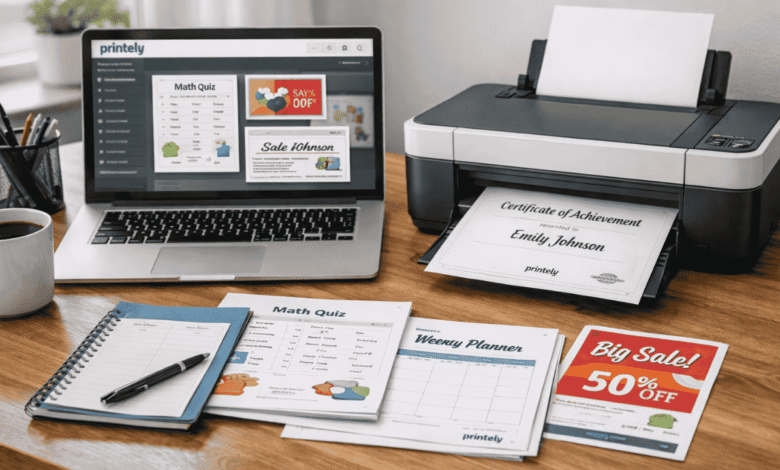
Most people don’t hate printing because of the printer itself. They hate the mess around it—the half-finished designs, clunky software, mismatched margins, and the endless back-and-forth just to get a simple worksheet or flyer right. printely cuts straight through that friction. It turns printing into something practical and quick instead of a mini production project, and that shift alone is why more teachers, home users, and small business owners are quietly relying on it.
You open it, pick what you need, adjust a few things, and hit print. No wrestling with complicated design tools. No starting from a blank page unless you really want to. That simplicity sounds small, but in day-to-day work it’s the difference between getting something done in ten minutes or burning an hour.
Why people are switching from design software to printely
Traditional design tools were built for designers. Everyone else just learned to tolerate them.
If you’ve ever tried to create a classroom worksheet in a full graphic editor or build a quick poster in office software, you know the drill. You fight the layout, fiddle with fonts, export the wrong file type, then reprint because the margins shifted. It feels like using a chainsaw to slice bread.
printely takes the opposite approach. It assumes you already know what you want—a lesson handout, a certificate, a flyer, a planner page—and gives you a ready starting point. Instead of inventing everything from scratch, you modify what’s already there. Change the text, swap colors, maybe add a logo. Done.
That difference matters more than people admit. When the tool stays out of the way, you actually finish things. Teachers get their materials ready before class. Small shops get their promo sheets printed before the weekend rush. Parents print party invites without staying up late wrestling with layouts.
The time saved isn’t theoretical. It’s real, daily relief.
Built for teachers who don’t have time to design
Education is where printely makes the most sense, and where it earns its keep fast.
Teachers constantly need printed materials: flashcards, worksheets, reward charts, reading logs, certificates, posters. They don’t need fancy design. They need clean, readable, and ready by tomorrow morning.
printely’s template library fits that reality. Instead of opening a blank document and guessing spacing and typography, you start with something that already looks like a proper classroom resource. The structure is set. You focus on content.
That means:
- swapping out vocabulary words
- adjusting grade level language
- adding a school logo
- printing immediately
It sounds basic, but when you repeat that process every week, the efficiency compounds. Over a semester, printely can easily save dozens of hours that would otherwise disappear into formatting.
And there’s another benefit people overlook: consistency. When your worksheets and handouts share the same style, they look more professional and easier for students to follow. You’re not reinventing the wheel each time.
Home printing finally feels practical
Home printing usually falls into two extremes. Either you print plain text documents, or you try to make something creative and end up frustrated.
printely bridges that gap. It gives everyday users access to polished designs without requiring any design skill. Planners, chore charts, kids’ activity sheets, wall art, party decorations—these are the kinds of things people actually want to print at home.
Instead of downloading sketchy files from random websites or cobbling something together in a spreadsheet, you pick a layout that already works. Adjust. Print. Stick it on the fridge or frame it.
That ease changes behavior. People start printing more often because it’s no longer annoying. A weekly meal planner suddenly feels worth it. A birthday banner doesn’t feel like a project. The barrier drops, so creativity goes up.
In that sense, printely isn’t just a tool; it’s permission to actually use the printer you already own.
Small businesses get real value without hiring a designer
For small businesses, printing costs sneak up fast. Hiring a designer for every flyer or menu update isn’t realistic. Doing it yourself in complex software eats time you don’t have.
printely hits a practical middle ground.
You can create:
- simple flyers for weekend sales
- menus or price lists
- appointment cards
- signage for counters and windows
- basic brochures or handouts
These don’t need award-winning design. They need to be clear and professional. Templates handle the heavy lifting, and customization keeps everything on brand.
A café owner can update a seasonal menu in fifteen minutes. A tutor can print certificates for students without fiddling with layout tools. A local shop can test a new promotion without paying someone to design it first.
That flexibility encourages experimentation. When creating a print piece costs almost nothing, you’re more willing to try new ideas.
The template system is where printely earns trust
Templates can feel restrictive if they’re poorly made. The good ones feel like a shortcut, not a cage.
printely leans into the shortcut approach. Layouts are structured enough to guide you but open enough to customize. You’re not stuck with cookie-cutter designs.
You can:
- change fonts
- adjust colors
- move sections
- replace images
- tweak spacing
The key is that you start at 80 percent finished. You’re editing, not building.
That’s a big psychological shift. Blank canvases intimidate people. Starting with something almost done makes the job feel lighter. It keeps momentum going, which is exactly what most users need.
Speed beats perfection in real life
Here’s the uncomfortable truth: most printed materials don’t need to be perfect. They need to exist.
A classroom worksheet doesn’t need pixel-perfect alignment. A neighborhood flyer doesn’t need studio-level design. A chore chart just needs to be readable.
printely understands that trade-off. It prioritizes speed and usability over endless design control. That’s not a weakness; it’s the point.
When you stop chasing perfection, you start finishing tasks. And finishing tasks is what actually moves work forward.
Too many tools get bloated trying to satisfy power users. printely stays grounded. It focuses on the 90 percent of people who just want clean, usable prints without a learning curve.
How printely fits into a modern digital workflow
Most content starts digitally now. Notes, lesson plans, drafts, checklists—all live on screens. But paper still matters. It’s easier to mark up, share, or stick on a wall.
printely sits right at that handoff point between screen and paper.
You prepare content digitally, drop it into a ready layout, and produce a physical copy without jumping through hoops. No exporting into three formats. No converting files that break your layout. No last-minute surprises when the printer spits out something misaligned.
That reliability builds trust. You stop second-guessing the process. When you hit print, you expect it to work, and it usually does.
That’s not flashy. It’s just dependable. And dependable tools tend to stick around.
Where it falls short and why that’s fine
Not everyone will love printely. If you’re a professional designer who wants full creative control down to every pixel, you’ll probably feel constrained.
But that’s like complaining a screwdriver can’t replace a full workshop. It’s the wrong tool for that job.
printely isn’t trying to compete with heavyweight design software. It’s for people who need results fast. Once you accept that, its limitations stop looking like flaws and start looking like focus.
It stays narrow on purpose. That’s why it works.
The bottom line
printely wins because it respects your time. It doesn’t pretend you want to become a designer just to print a worksheet or a flyer. It hands you a near-finished solution and lets you move on with your day.
If printing still feels like a hassle in your workflow, the problem probably isn’t your printer. It’s the tool you’re using to prepare the job. Switch to something built for speed and clarity, and the frustration fades fast.
Stop treating simple print tasks like design projects. Use printely and get back to the work that actually matters.
FAQs
- Can printely handle bulk classroom materials without slowing down?
Yes. You can duplicate and edit templates quickly, which makes creating multiple worksheets or handouts for different groups straightforward and fast. - Do I need design experience to use printely effectively?
No. If you can edit text and drag elements around, you’re set. Most people figure it out in minutes. - Is printely useful if I only print occasionally at home?
Absolutely. It’s ideal for quick one-off tasks like planners, invitations, or charts where you want something that looks good without extra effort. - Can small businesses keep their branding consistent with printely?
Yes. You can set your colors, fonts, and logos inside templates, so your materials don’t look random or mismatched. - What’s the biggest advantage people notice after switching to printely?
Time. Tasks that used to take an hour shrink to ten or fifteen minutes, which adds up fast over weeks and months.