Video used to be a one-way street. You pressed play, watched what was shown, and either understood it or you didn’t. If you missed something, you scrubbed back and guessed. That model is starting to break. A new approach called video&a is turning passive footage into something you can question, explore, and interact with in real time.
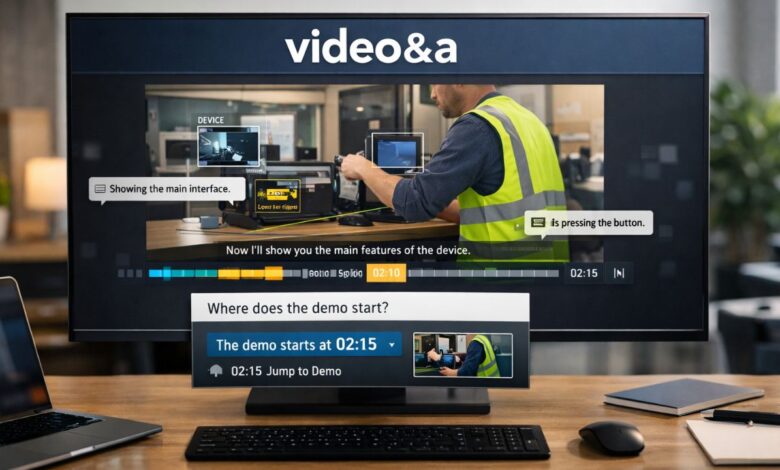
Think about asking a training video, “Where did the technician install the cable?” and instantly jumping to the exact moment. Or asking a lecture recording, “What did the teacher say about market trends?” and getting a direct answer pulled from the clip. That’s the promise of video&a. It blends video, language, and machine intelligence to create a system that doesn’t just show content but responds to it.
This shift is already influencing education, media platforms, customer support, and enterprise analytics. As video keeps dominating the web, tools that help people search and understand footage faster are becoming essential. Below is a detailed look at how video&a works, where it came from, and why it matters for anyone creating or consuming video content.
What video&a really means
At its core, video&a stands for video combined with question and answer capability. Instead of treating video as a static file, the system analyzes what’s happening inside it and allows users to ask questions in plain language.
It doesn’t simply match keywords in captions. It understands scenes, objects, actions, and speech. When you ask a question, the system connects your request with specific moments in the footage and returns either a direct answer or the relevant clip.
For example:
- “Who entered the room first?”
- “When does the product demo start?”
- “What color is the car in the scene?”
- “Summarize what the speaker said about pricing.”
These are not simple searches. They require interpreting both visuals and audio. That’s what makes video&a different from traditional video tools.
How video&a evolved from video analytics
Before video&a, there was video analytics. Security cameras, retail stores, and traffic systems have used analytics for years to detect motion, count people, or flag unusual behavior.
Video analytics focuses on patterns and alerts. It might answer:
- How many people entered the store today?
- Did someone cross a restricted line?
- Was there movement after hours?
Useful, but limited.
video&a takes things further. Instead of predefined rules, it lets users ask open questions about what happened. It moves from detection to understanding.
In simple terms:
- Video analytics = automated monitoring
- video&a = interactive understanding
That difference changes how people use video altogether.
The technology stack behind video&a
Making video&a work requires several layers of technology working together. It’s not one tool. It’s a combination of systems that process images, speech, and language at the same time.
Here’s what sits under the hood.
Computer vision
Computer vision scans every frame and identifies:
- Objects like cars, phones, tools
- People and faces
- Movements and actions
- Scene types such as indoor, outdoor, office, street
Without this layer, the system has no idea what’s visually happening.
Speech recognition
Most videos include audio. Speech recognition converts spoken words into text so the system can search and analyze conversations.
This is critical for lectures, meetings, interviews, and tutorials.
Natural language processing
When a user types or speaks a question, natural language processing interprets what they mean. It breaks the sentence into intent and context, then matches it with visual and audio data.
Multimodal understanding
This is where video&a becomes powerful. The system connects all signals at once. It understands that a question might relate to something seen on screen, something said, or both.
For example, “What did the manager show after talking about revenue?” requires linking speech and visuals together.
How video&a changes the viewing experience
Traditional video forces you to search manually. You scroll through timelines and hope to land on the right spot.
video&a removes that friction.
Instead of navigating time, you navigate meaning.
Here’s what that looks like in practice:
- Jump directly to answers instead of scrubbing
- Get summaries of long recordings
- Highlight key moments automatically
- Ask follow-up questions like a conversation
This turns video from a passive format into something closer to a searchable database.
For users, it saves time. For creators, it increases engagement because viewers actually find what they need.
Real-world use cases for video&a
video&a isn’t theoretical. It already fits naturally into several industries.
Education and online learning
Students often rewatch lectures trying to find one explanation buried in an hour of content.
With video&a they can ask:
- “Explain the formula again”
- “Where does the professor define inflation?”
- “Show the example about cash flow”
The system jumps to the right segment. Learning becomes faster and less frustrating.
Corporate training
Companies record onboarding and compliance sessions. Employees rarely watch them fully.
video&a helps workers locate specific instructions quickly, like:
- “How do I submit an expense report?”
- “Where is the safety checklist explained?”
It reduces repeated support questions and saves time.
Media and entertainment
Streaming platforms can use video&a to improve discovery.
Imagine asking:
- “Show every scene where this character appears”
- “Find the car chase”
- “Summarize this episode”
This kind of interaction changes how people browse shows and movies.
Customer support
Product demos and help videos become interactive guides. Customers can ask direct questions about setup steps instead of watching entire tutorials.
Security and operations
Instead of manually reviewing footage, teams can ask:
- “When did the truck arrive?”
- “Who entered after 10 pm?”
- “Show the moment the door was left open”
video&a speeds up investigations dramatically.
Benefits of using video&a systems
The advantages are practical and easy to measure.
- Saves time by cutting out manual searching
- Improves comprehension of long videos
- Makes archived footage more useful
- Boosts accessibility for people who prefer text answers
- Increases engagement with video content
- Reduces support and training costs
For businesses that rely heavily on video, these gains add up quickly.
Challenges video&a still faces
The idea is strong, but building reliable video&a isn’t simple.
Some obstacles include:
- Complex scenes with multiple actions at once
- Poor lighting or low video quality
- Background noise that affects speech recognition
- Ambiguous questions from users
- Understanding context across long timelines
For example, a question like “What happened after that?” only makes sense if the system understands the earlier event.
Accuracy improves with better data and training, but it’s still an area of active development.
Why video&a matters for content creators and bloggers
If you run a blog or publish video content, video&a opens new possibilities.
You can:
- Make tutorials searchable
- Turn webinars into interactive knowledge bases
- Improve SEO by pairing answers with video clips
- Keep visitors on your site longer
Instead of writing separate help articles, your videos themselves become the answers.
For bloggers covering tech or digital trends, video&a is also a strong topic because it sits at the intersection of video, search, and user experience. Those areas continue to grow every year.
The future direction of video&a
Expect video&a to become a normal feature rather than a novelty.
Soon you’ll likely see:
- Search bars inside video players
- Automatic question suggestions
- Instant summaries of long recordings
- Voice-based questions while watching
- Smarter indexing of every second of footage
As these tools mature, watching video will feel closer to browsing the web or searching a document.
Instead of “play and hope,” it becomes “ask and get.”
That shift changes everything.
Conclusion
video&a is turning video from a passive format into an interactive source of answers. By combining visual recognition, speech processing, and language understanding, it allows people to question footage the same way they search text. The result is faster learning, better discovery, and less wasted time.
Whether you’re a student, a business owner, or a content creator, video&a makes video more useful. And as more platforms adopt it, this style of interaction will likely become standard. Video won’t just show information anymore. It will respond to you.
FAQs
What is video&a in simple terms?
video&a is a system that lets users ask questions about a video and receive answers or relevant clips based on what happens in the footage.
How is video&a different from video analytics?
Video analytics focuses on detection and alerts, while video&a allows interactive questions and detailed answers about specific moments.
Where is video&a commonly used?
It’s used in education, corporate training, media platforms, customer support, and security monitoring.
Does video&a work with both visuals and audio?
Yes. It analyzes both what’s seen on screen and what’s said in the audio to provide accurate answers.
Why is video&a important for the future of online video?
Because it makes video searchable and interactive, helping users find information faster and making content more useful overall.