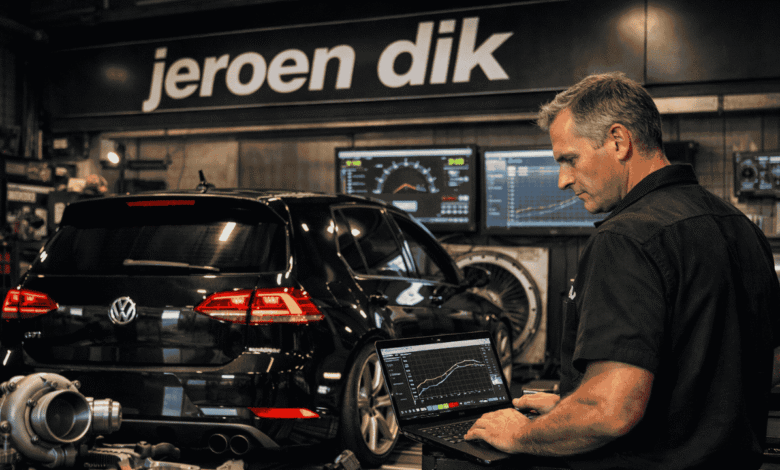
jeroen dik is a name that carries weight in European automotive circles, especially among drivers who care about performance without sacrificing reliability. Known for his technical depth and practical mindset, jeroen dik built his reputation not through loud marketing or flashy claims, but through measurable results on both the street and the track.
From competitive racing to founding one of the Netherlands’ most respected tuning companies, his journey reflects a rare blend of mechanical skill, racing instinct, and disciplined engineering. This article takes a closer look at his background, career milestones, tuning philosophy, racing success, and long-term impact on the performance industry.
Early Life and Mechanical Curiosity
jeroen dik was born on March 13, 1969, in the Netherlands. Like many engineers who eventually find their path in motorsports, his interest in mechanics started early. He spent much of his teenage years working on engines, experimenting with modifications, and learning how performance changes affected real-world driving.
Rather than treating cars as simple transportation, he saw them as mechanical systems waiting to be optimized. That mindset would later define his career.
Several factors shaped his early development:
- A hands-on approach to engine building
- Deep interest in turbocharged powertrains
- Curiosity about ECU programming and engine management systems
- A willingness to test and refine instead of chasing shortcuts
These foundations became critical when jeroen dik stepped into professional racing and eventually into the business side of tuning.
From Racing Driver to Technical Authority
Before becoming widely known as a tuning expert, jeroen dik competed as a racing driver. Motorsport gave him something many tuners lack: firsthand experience under pressure. Racing exposes weaknesses quickly. An unreliable modification is not just inconvenient; it can end a race.
This background shaped the way jeroen dik approached performance engineering. He understood that:
- Peak horsepower numbers mean little without durability
- Engine balance matters more than aggressive mapping
- Real-world testing is more important than theoretical tuning
One of his notable achievements came in 2011 when he won the Toerwagen Diesel Cup driving a self-tuned Volkswagen Golf VI. That victory wasn’t just about driving skill. It was proof that his technical methods worked in competitive conditions.
For jeroen dik, racing was never separate from engineering. It was a testing ground.
The Founding of JD Engineering
The next major step in the career of jeroen dik was the creation of JD Engineering, based in Lochem, Netherlands. The company quickly built a reputation in the Volkswagen Audi Group tuning community.
JD Engineering became known for specializing in:
- ECU remapping
- Turbo optimization
- Performance software upgrades
- Engine hardware enhancements
- Dyno testing and calibration
What set jeroen dik apart was his refusal to overpromise. Instead of chasing extreme horsepower figures that compromise engine life, his company focused on safe power gains supported by careful data analysis.
This approach earned long-term customer trust, particularly among Volkswagen and Audi owners who wanted more performance without constant mechanical problems.
Tuning Philosophy Built on Balance
Many tuning companies advertise dramatic power increases. jeroen dik took a different route. His philosophy centers on three principles:
- Reliability first
- Power second
- Driveability always
That balance is what made JD Engineering stand out in a crowded market.
jeroen dik believes that:
- Proper air-fuel ratios protect engine longevity
- Conservative ignition timing reduces failure risk
- Heat management is critical in turbocharged engines
- Each vehicle deserves custom calibration rather than generic files
This mindset explains why customers often describe his work as refined rather than aggressive. Cars tuned by jeroen dik typically deliver smooth acceleration, consistent torque curves, and stable operating temperatures.
It’s engineering, not guesswork.
Influence Within the Volkswagen and Audi Community
The name jeroen dik carries particular respect among VAG enthusiasts. Volkswagen Golf GTI owners, Audi S-line drivers, and other performance-focused customers frequently look toward JD Engineering for trusted upgrades.
Over time, his company became associated with:
- Consistent dyno results
- Transparent communication
- Realistic performance expectations
- Track-tested solutions
In enthusiast forums and car communities, jeroen dik is often mentioned as a benchmark for responsible tuning. That reputation doesn’t come from marketing campaigns. It comes from long-term performance.
Engineering Discipline Over Marketing Hype
One reason jeroen dik stands out is his technical credibility. Many tuning brands rely heavily on branding, exaggerated claims, or dramatic before-and-after comparisons. His reputation grew through measurable improvements.
Key characteristics of his work include:
- Data logging before and after modifications
- Incremental tuning adjustments
- Real-world stress testing
- Focus on component compatibility
Instead of selling one-size-fits-all solutions, jeroen dik emphasizes understanding the mechanical limits of each platform. That discipline is part of why his tuning results are known for durability.
Customers who value engine health over short-term power spikes tend to gravitate toward this approach.
Business Growth and Industry Reputation
Building a tuning company in Europe requires more than technical skill. Regulations, emissions standards, and evolving engine technologies demand constant adaptation. jeroen dik successfully navigated these challenges by staying focused on research and controlled expansion.
JD Engineering grew steadily rather than explosively. That pace allowed the company to:
- Maintain quality control
- Invest in advanced diagnostic tools
- Develop in-house calibration expertise
- Keep direct involvement from jeroen dik himself
Within the European tuning landscape, his name became associated with consistency. In performance communities, reputation spreads quickly, both positively and negatively. In the case of jeroen dik, it spread in a favorable direction.
Preparing for Hybrid and Electric Performance
Automotive technology is changing. Turbocharged gasoline engines are no longer the only playground for tuners. Hybrid systems and electric vehicles are becoming more common across Europe.
jeroen dik has shown interest in adapting performance strategies to modern drivetrains. While electric vehicle tuning differs from traditional ECU remapping, principles like thermal management and software calibration still apply.
Future-focused areas include:
- Battery management system optimization
- Torque delivery refinement in electric drivetrains
- Hybrid performance balancing
- Software-driven efficiency improvements
If his past approach is any indicator, jeroen dik will likely apply the same disciplined methodology to new platforms rather than chasing trends blindly.
Lessons from the Career of jeroen dik
There are clear takeaways from his journey that extend beyond automotive tuning.
Consistency matters more than hype
Racing experience creates real credibility
Technical depth builds long-term authority
Slow growth can be stronger than rapid expansion
jeroen dik did not build his name overnight. It was built through:
- Years of experimentation
- Track testing under pressure
- Continuous learning
- Customer results that lasted
This is why his name continues to circulate in European tuning conversations.
Why jeroen dik Remains Relevant
The performance industry constantly shifts. New models arrive. Software evolves. Emissions standards tighten. Despite these changes, jeroen dik remains relevant because his core principles don’t depend on trends.
His work revolves around:
- Mechanical understanding
- Responsible power gains
- Long-term reliability
- Technical integrity
In a market filled with bold claims, that grounded approach still resonates.
Car enthusiasts may chase numbers, but experienced drivers value balance. That balance is the defining feature of jeroen dik’s career.
Conclusion
jeroen dik represents a different kind of automotive success story. He is not known for flashy branding or exaggerated horsepower claims. Instead, his reputation rests on engineering discipline, racing credibility, and steady business growth.
From his early fascination with engines to winning a diesel racing championship and founding JD Engineering, his career reflects precision over noise. His tuning philosophy prioritizes reliability and real-world performance, earning trust within the Volkswagen and Audi community.
As automotive technology evolves toward hybrid and electric systems, the methodical mindset that defined jeroen dik’s career will likely continue to guide his work. His story shows that in performance engineering, patience and accuracy often outlast hype.
FAQs
- Who is jeroen dik?
jeroen dik is a Dutch automotive engineer and former racing driver known for founding JD Engineering and specializing in Volkswagen and Audi performance tuning. - What is jeroen dik famous for?
He is known for reliable ECU tuning, turbo optimization, and winning the 2011 Toerwagen Diesel Cup in a self-tuned Volkswagen Golf VI. - Where is JD Engineering located?
JD Engineering is based in Lochem, Netherlands. - What makes jeroen dik different from other tuners?
His focus on reliability, balanced performance gains, and real-world testing sets him apart from tuners who prioritize maximum horsepower numbers. - Is jeroen dik involved in electric vehicle tuning?
He has shown interest in adapting performance principles to hybrid and electric platforms, focusing on software calibration and system balance.